



FCL vs LCL Shipping: How to Choose the Right Ocean Freight Option
FCL vs LCL Shipping: How to Choose the Right Ocean Freight Option
When planning an international shipment, one of the most important decisions businesses face is choosing between Full Container Load (FCL) and Less than Container Load (LCL) shipping.
Understanding the difference between FCL vs LCL shipping can help importers, exporters, and supply chain professionals evaluate transportation costs, cargo handling requirements, and delivery schedules.
Both methods play an important role in global trade, but choosing the right option depends on your cargo volume, shipment characteristics, budget, and destination.
In this guide, Easy Sea Way explains the key differences, advantages, cost considerations, and practical factors to evaluate before booking your next ocean freight shipment.
What Is FCL Shipping?
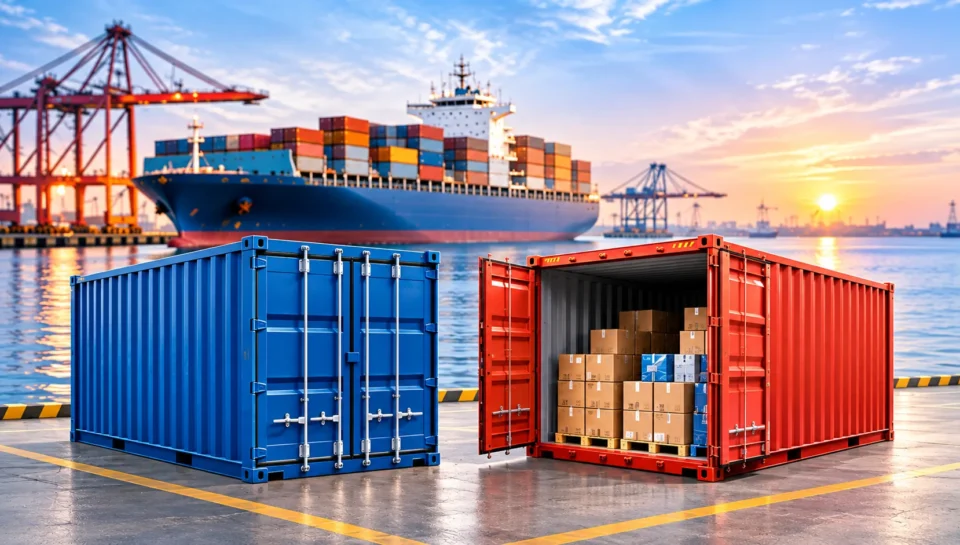
FCL stands for Full Container Load. It refers to ocean freight transportation in which one shipper books a container for exclusive use.
The container does not necessarily need to be completely filled. A business may book a full container even when its cargo occupies only part of the available space.
Common shipping container sizes include 20-foot and 40-foot containers, with equipment selection depending on cargo dimensions, weight, and transportation requirements.
Key Advantages of FCL Shipping
- Dedicated container space for one shipment.
- Fewer cargo handling stages related to consolidation and deconsolidation.
- Potentially lower transportation costs per unit for larger cargo volumes.
- Greater control over loading arrangements.
- No need to wait for other shipments to be consolidated into the same container.
When Should You Choose FCL?
FCL is often suitable for businesses transporting large cargo volumes, handling regular shipments, or requiring dedicated container space.
It may also be economically attractive when a container is not completely full, depending on the freight rates and additional charges.
What Is LCL Shipping?
LCL stands for Less than Container Load. It allows businesses to transport smaller cargo volumes without booking an entire shipping container.
Under this arrangement, cargo belonging to different shippers is consolidated into a shared container.
A logistics provider coordinates the consolidation of shipments at origin and their separation at the destination.
Key Advantages of LCL Shipping
- Suitable for smaller cargo volumes.
- No need to book an entire container.
- Flexible shipping arrangements for small and medium-sized businesses.
- Useful for occasional shipments or smaller inventory replenishments.
- Allows businesses to transport goods in smaller quantities when appropriate.
When Should You Choose LCL?
LCL may be suitable for importers and exporters shipping small quantities of commercial goods.
It can be particularly useful when a company is introducing new products, managing limited inventory, or shipping irregular volumes.
However, additional handling and consolidation procedures may affect the overall transportation time and cost.
FCL vs LCL Shipping: Key Differences
Understanding the main differences between these two shipping methods can help businesses make informed logistics decisions.
| Factor | FCL Shipping | LCL Shipping |
|---|---|---|
| Container usage | Dedicated container | Shared container |
| Cargo volume | Generally larger shipments | Generally smaller shipments |
| Pricing structure | Usually per container | Usually by chargeable weight or volume |
| Cargo handling | Fewer consolidation-related operations | Additional consolidation and deconsolidation |
| Transit time | May be shorter | May require additional handling time |
| Flexibility | Suitable for dedicated shipments | Suitable for smaller cargo volumes |
| Typical applications | Larger or specialized shipments | Small commercial shipments |
The most suitable option depends on the shipment’s actual requirements rather than a single universal rule.
FCL vs LCL Shipping Costs: Which Is More Economical?
Shipping cost is one of the main considerations when choosing between FCL and LCL.
However, the lowest initial freight rate does not always represent the lowest total shipping cost.
Understanding FCL Shipping Costs
FCL pricing is generally based on the container and the applicable shipping route.
Additional charges may include terminal handling, documentation, inland transportation, customs-related services, and other agreed logistics costs.
For larger shipments, using dedicated container space may reduce the cost per unit of cargo.
Understanding LCL Shipping Costs
LCL rates are commonly calculated using chargeable weight or measurement, often referred to as W/M.
This means the pricing basis may depend on cargo volume in cubic meters or its weight, according to the applicable tariff.
Additional consolidation, handling, and destination charges may also apply.
Therefore, businesses should compare the complete transportation quotation instead of focusing only on the ocean freight rate.
A Practical Example: Choosing Between FCL and LCL
Imagine a business importing commercial goods with a total cargo volume of 4 cubic meters.
If the goods are suitable for shared-container transportation, LCL may provide a practical alternative to booking a full container.
Now consider another company shipping approximately 20 cubic meters of cargo.
In this situation, comparing FCL and LCL quotations becomes particularly important because the total cost of a dedicated container may be competitive.
These figures are illustrative rather than fixed thresholds. Actual decisions should be based on cargo weight, freight rates, handling requirements, and the shipping route.
Six Factors to Consider Before Choosing FCL or LCL
1. Cargo Volume and Weight
Cargo volume is an important starting point when comparing FCL and LCL shipping.
Businesses should calculate the total cubic meters (CBM), cargo weight, and package dimensions before requesting quotations.
Accurate measurements help logistics providers evaluate available transportation options.
2. Nature of the Goods
Fragile, sensitive, oversized, or specially regulated goods may require additional transportation arrangements.
Some products may not be suitable for shared-container shipping because of cargo compatibility, handling requirements, or carrier restrictions.
3. Total Transportation Costs
A complete cost comparison should consider ocean freight charges, cargo handling, storage when applicable, customs-related expenses, and inland transportation.
These costs may vary depending on the selected service and destination.
4. Shipping Schedules
FCL shipments may avoid the consolidation and deconsolidation stages associated with LCL.
However, actual delivery time depends on vessel schedules, routing, port conditions, and other operational factors.
Businesses should compare realistic estimated transportation timelines for both options.
5. Origin and Destination Ports
Not every shipping route offers the same container and consolidation services.
Available schedules, transit arrangements, and destination handling requirements may influence the most suitable option.
6. Packaging and Cargo Protection
Proper packaging is essential for both FCL and LCL shipments.
For shared-container transportation, packaging should account for the additional handling involved in consolidation and deconsolidation.
Is FCL Shipping Safer Than LCL?
FCL can reduce the number of cargo handling stages associated with shared-container operations.
This may be beneficial for certain types of sensitive or valuable goods.
However, neither method automatically guarantees cargo safety.
Packaging quality, proper stowage, cargo securing, handling procedures, and transportation conditions remain important in both cases.
Choosing an appropriate shipping method requires assessing the specific risks and requirements of the shipment.
How Easy Sea Way Supports Your Ocean Freight Planning
At Easy Sea Way, we understand that every international shipment has unique logistics requirements.
Our services include ocean freight, freight forwarding coordination, road and air freight, customs clearance, and integrated logistics solutions.
We focus on helping clients understand their shipping requirements and explore transportation options based on cargo characteristics, available services, and operational needs.
Whether your business is evaluating a dedicated container or a smaller consolidated shipment, clear information and careful planning are essential.
Learn more about our Ocean Freight Services.
Frequently Asked Questions About FCL and LCL Shipping
What is the main difference between FCL and LCL?
FCL provides dedicated container space for one shipment, while LCL allows multiple shippers to share a container.
Is LCL always cheaper than FCL?
No. LCL can be more economical for small shipments, but total costs depend on cargo volume, weight, origin, destination, and handling charges.
Can I book an FCL container without filling it completely?
Yes. Full container shipping means dedicated container use, not necessarily a container filled to maximum capacity.
Is FCL faster than LCL?
FCL may avoid additional consolidation and deconsolidation time. Nevertheless, actual transportation duration depends on carrier schedules and route conditions.
What details are required to compare FCL and LCL rates?
You should provide the cargo description, weight, dimensions, total volume, origin, destination, shipment readiness date, and any special handling requirements.
Final Thoughts: Choosing the Right Shipping Solution
Selecting between FCL and LCL shipping is not simply a question of shipment size.
It involves comparing transportation costs, cargo characteristics, handling requirements, available schedules, and business priorities.
FCL may offer advantages for larger shipments requiring dedicated container space, while LCL provides flexibility for smaller cargo volumes.
The right approach starts with accurate information and a clear understanding of your logistics needs.
Planning Your Next Ocean Freight Shipment?
Easy Sea Way is ready to discuss your shipping requirements and help you explore available transportation options.
Share your cargo details, volume, weight, origin, and destination with our team to request a quotation.